The 2025 Deltek Clarity GovCon Study found that contractors still spend more than seven hours just developing the first draft of a single proposal, and that's before red-team reviews, pricing iterations, or formatting fixes.That math is changing fast. AI-powered proposal platforms like GovConHelp.com now compress weeks of capture and writing work into hours. And the shift is no longer optional, because the agencies on the other side of the submission portal are using AI too.
What the Data Says About AI in Proposal Work
One recent benchmark comes from Loopio's 2025 RFP Response Trends & Benchmarks Report, produced in partnership with the Association of Proposal Management Professionals (APMP). Drawing on responses from more than 1,500 teams globally, the report found that the average RFP win rate climbed from 43% in 2024 to 45% in 2025, the largest year-over-year jump in five years. Loopio attributes much of that lift to AI adoption among proposal teams, which roughly doubled to 68% in a single year.
The productivity numbers are even more striking. According to Lohfeld Consulting's November 2025 analysis, teams that have integrated AI into their proposal workflow have cut per-proposal effort from about 25 hours to under 5 hours, freeing capacity for the strategic, win-theme work that actually differentiates a bid. For small and mid-sized GovCons, that compression is the difference between bidding three opportunities a quarter and bidding ten.
The Other Side: Agencies Are Reading Proposals With AI
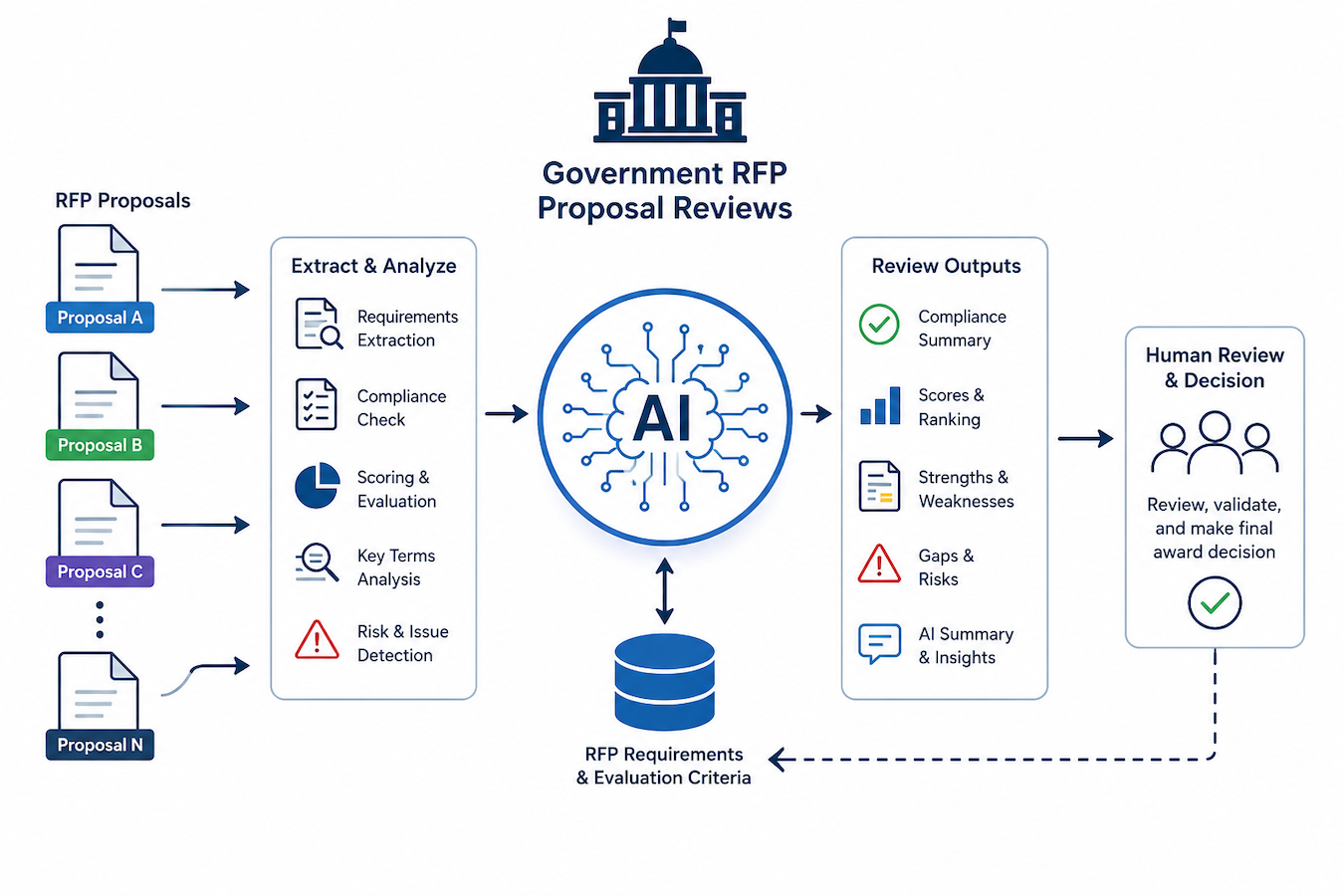
What many contractors don't yet appreciate is that AI has crossed the table. Federal News Network reported in April 2026 that agencies including the DoD, GSA, DHS, and VA are now embedding AI into their acquisition workflows, including the evaluation of incoming proposals.
The GSA's Solicitation Review Tool (SRT) and the IRS's Contract Clause Review Tool already reduce solicitation review time from hours to minutes, flagging missing Section 508 clauses, outdated provisions, and formatting gaps. The Department of Homeland Security's Procurement Innovation Lab uses AI to apply past-performance data to current submissions. And as Squared Compass put it bluntly in a recent industry post, "proposals are now often machine-read before a human ever lays eyes on them."
The practical implication is uncomfortable. If an AI compliance check finds your proposal non-compliant on something as small as wrong font size, a missing form, or mismatched section numbering, your submission can be eliminated before any human evaluator reads your technical approach.
Beyond Speed: Compliance Confidence
Time savings is the headline benefit of AI in proposal writing. The underlying benefit is harder to quantify and ultimately more strategic: symmetry with the evaluator. When the government is using AI to score compliance, formatting, and past-performance fit, the contractor who shows up with a hand-built compliance matrix and a 40-hour Word document is operating at a structural disadvantage.
AI proposal tools will not write your win themes for you, and they will not replace the judgment of an experienced capture manager. What they will do is make sure that the box-checking, formatting, and compliance work, the work that determines whether a human ever reads your proposal at all, is done at the same speed and rigor as the system on the other side of the submission portal.
For GovCons of any size, that capability has shifted from competitive edge to cost of entry. GovConHelp.com can get your proposal started off the right way to ensure AI helps rather than hinders your proposal.
- • Federal agencies are using AI to evaluate proposals. Is your team ready? — Federal News Network (April 2026)
- • How AI Tools Can Transform Proposal Management Now — Lohfeld Consulting (November 2025)
- • Responsive Releases New APMP-backed Research Report — Winning the Business
- • RFP Win Rate Benchmarks by Industry (2025 Data) — Steerlab
- • AI Is Now Evaluating Your Federal Proposals — Squared Compass
- • How GovCons Can Use AI for Government Proposal Writing — Deltek
- • Navigating Federal Solicitations with Artificial Intelligence — National Law Review